
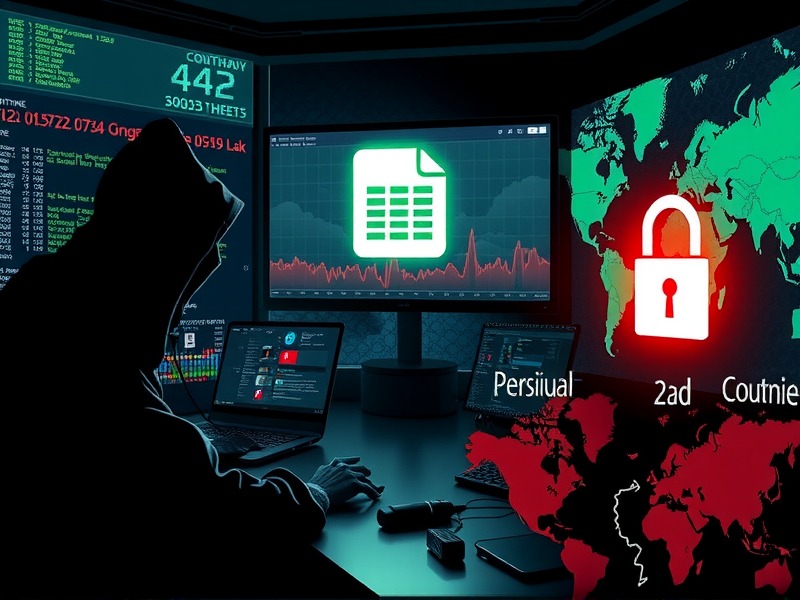
The threat landscape continues to evolve, and the recent disruption of the GRIDTIDE global cyber espionage campaign underscores the need for vigilance across all sectors. In this report, we analyze the tactics, techniques, and procedures (TTPs) employed by the threat actor group UNC2814, assess the impact of their operations, and provide actionable recommendations for security analysts and organizations worldwide.
Campaign Overview
UNC2814, a sophisticated threat actor group with suspected ties to China, has been active since 2017. The group targeted telecommunications and government organizations across four continents, leveraging an advanced backdoor named GRIDTIDE. The campaign was uncovered and disrupted by a coordinated effort involving AlienVault, Google Cloud, and international security partners.
GRIDTIDE Backdoor Capabilities
The GRIDTIDE backdoor is notable for its use of the Google Sheets API as a covert command-and-control (C2) channel. By embedding malicious commands within seemingly legitimate spreadsheet API requests, the actor bypassed conventional security controls that focus on outbound network traffic. GRIDTIDE’s capabilities include:
- Execution of arbitrary shell commands
- File upload and download for exfiltration and payload delivery
- Persistence mechanisms that survive system reboots
- Dynamic IP whitelisting to evade detection
In total, 53 victims were confirmed across 42 countries, with an additional 20 suspected infections. The campaign’s reach, coupled with its stealthy C2 approach, posed a significant threat to critical infrastructure and national security.
Disruption and Mitigation Efforts
The disruption involved terminating attacker-controlled cloud projects, disabling compromised infrastructure, and revoking access to the Google Sheets API. This multi-faceted approach required coordination between cloud service providers, law enforcement, and international security communities. The immediate cessation of GRIDTIDE’s operations halted ongoing exfiltration and command execution.
Threat Intelligence Indicators
Indicators of Compromise (IOCs) identified during the investigation include:
- Unique user-agent strings associated with GRIDTIDE requests
- Unusual Google Sheets API endpoints with embedded command payloads
- Known malicious IP addresses linked to the attacker’s infrastructure
- Hashes of known GRIDTIDE binaries and scripts
These IOCs should be incorporated into threat detection feeds, SIEM rule sets, and endpoint detection and response (EDR) solutions to identify and remediate potential compromises.
Recommendations for Security Analysts
- Monitor Google Cloud API Traffic: Deploy network and cloud monitoring tools to detect anomalous usage of Google Sheets API, especially if the traffic originates from internal systems not typically using this service.
- Implement Strict API Access Controls: Use Identity and Access Management (IAM) policies to restrict API access to only those applications and users that require it. Enable two-factor authentication for all accounts with API privileges.
- Patch and Harden Endpoint Security: Ensure that all endpoints are up-to-date with the latest security patches. Deploy advanced EDR solutions capable of detecting unauthorized shell command execution and file transfer anomalies.
- Deploy Network Segmentation: Segment critical infrastructure networks to limit lateral movement opportunities for threat actors. Use micro-segmentation to isolate sensitive systems.
Regular Threat Hunting: Conduct proactive threat hunting exercises focused on identifying malicious API traffic, suspicious command execution, and abnormal file transfer patterns.
Share Indicators with the Community: Contribute IOCs to global threat intelligence platforms such as AlienVault OTX and the MITRE ATT&CK framework to aid collective defense.
Conclusion
The GRIDTIDE campaign demonstrates how threat actors can leverage legitimate cloud services to establish stealthy C2 channels. By understanding the tactics employed and implementing the recommended mitigations, organizations can significantly reduce the risk of similar attacks. Continuous monitoring, strict access controls, and collaboration across the security community remain essential in defending against evolving cyber espionage threats.
For more detailed technical insights, visit the official reports: AlienVault Pulse and Google Cloud Threat Intelligence Blog.
