
Phishing To Persistence CrySome RAT Infection Chain Analysis
The cyber‑threat landscape continues to evolve, with adversaries refining their tactics to blend in with legitimate system processes. The latest report published by AlienVault on 2026-07-07 reveals a sophisticated multi‑stage infection chain that culminated in the deployment of the CrySome RAT. This analysis distills the key phases, technical details, and actionable recommendations for security teams tasked with defending against such threats.
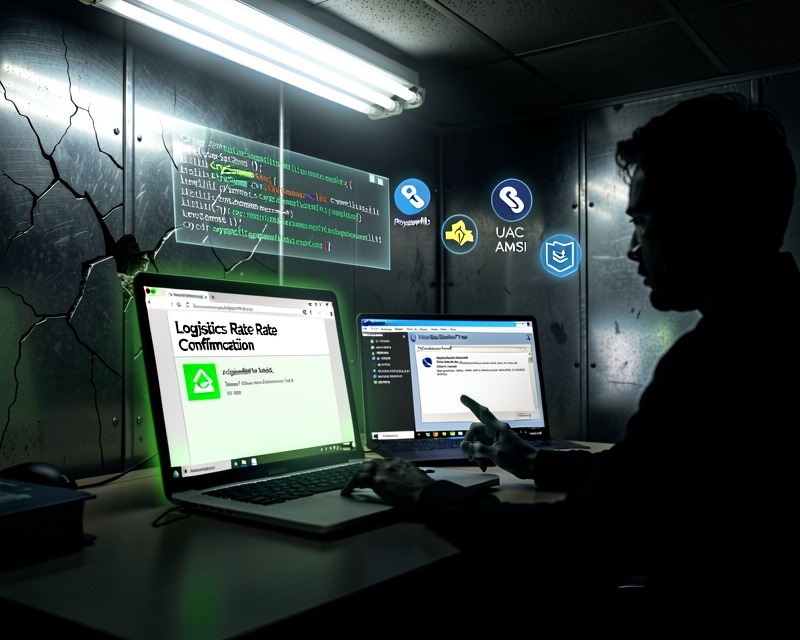
Stage 1 – Initial Access: The attackers began by crafting a spear‑phishing email that masqueraded as a logistics rate confirmation. The subject line was tailored to a specific industry segment, increasing the likelihood that recipients would open the attachment or click embedded links. Once engaged, the malicious payload executed silently on the victim’s workstation.
Stage 2 – Delivery of CrySome Trojan: The spear‑phishing message triggered the download of CrySome, a remote access trojan that has gained notoriety for its stealthy persistence mechanisms. Unlike many modern RATs, CrySome is intentionally lightweight and employs a modular architecture that allows attackers to tailor the malware to the target environment.
Stage 3 – Living‑off‑the‑Land Techniques: After establishing a foothold, the adversary leveraged legitimate Windows utilities to expand their reach while avoiding standard signature‑based detection. A notable technique involved the ICMLuaUtil COM interface, which the malware used to manipulate User Account Control (UAC) and bypass elevated privilege requirements. In addition, CrySome patched the Antimalware Scan Interface (AMSI) in memory, preventing Windows Defender from scanning for malicious activity.
Stage 4 – Disruption of Endpoint Protection: The attackers installed WinDefCtl, an open‑source tool designed to disable or reduce the effectiveness of Microsoft Defender. By weakening endpoint protection, the threat actors created a safer environment for subsequent payloads and data exfiltration activities.
Stage 5 – Persistence via Scheduled Tasks: CrySome introduced a scheduled task that ran under the guise of a benign system process. This mechanism ensured that the RAT resumed execution automatically after reboots or user logoffs, providing long‑term access without requiring repeated credential compromise.
Capabilities of CrySome RAT: The final payload delivered by the chain endowed the attackers with a full suite of remote capabilities. These included a hidden VNC interface for screen sharing, command execution via an in‑memory shell, comprehensive system reconnaissance (such as process enumeration and network mapping), and credential harvesting focused on Chromium‑based browsers to capture stored passwords and autofill data.
Analysis of Tactics: The campaign demonstrated that modern threat actors rely heavily on publicly available tools coupled with legitimate Windows processes. By doing so, they significantly reduce the risk of detection by traditional security controls while maintaining robust attack capabilities throughout the lifecycle of a compromise.
Recommendations for Security Analysts:
- Inspect Phishing Emails Closely: Deploy machine‑learning email filters specifically tuned to detect logistics and rate confirmation lures. Consider sandboxing attachments before opening them in production environments.
- Detect Living‑off‑the‑Land Activity: Monitor for anomalous use of PowerShell, scheduled tasks, and COM interfaces such as ICMLuaUtil. Implement endpoint analytics that correlate low‑privilege processes with subsequent privilege‑elevation attempts.
- Secure AMSI and UAC Settings: Harden AMSI by disabling in‑memory patching capabilities wherever possible. Enforce strict UAC policies and restrict execution of unsigned code from network shares.
- Protect Defender Integrity: Monitor for the installation or activation of tools like WinDefCtl that attempt to disable or downgrade Microsoft Defender. Use endpoint protection platforms that lock down configuration changes through Group Policy or other centralized mechanisms.
- Validate Persistence Mechanisms: Conduct regular audits of scheduled tasks and system registry keys that could be exploited for persistence. Leverage threat hunting queries that look for RAT‑style task names or unusual scheduling patterns.
- Implement Credential Hygiene: Enforce multi‑factor authentication for privileged accounts and consider the use of passwordless solutions to mitigate credential theft attacks. Employ browser security extensions that warn against compromised credentials in Chromium browsers.
These steps provide a layered defense strategy that addresses both technical controls and human factors, significantly reducing the likelihood that CrySome or similar RATs can establish and maintain footholds within an organization.
For deeper insights into this threat chain, readers are encouraged to consult the full AlienVault pulse at hxxps://otx.alienvault.com/pulse/6a4d09e0fbf878666b3d5afd as well as the Level Blue blog post located at hxxps://www[.]levelblue[.]com/blogs/spiderlabs-blog/from-phishing-to-persistence-a-crysome-rat-infection-chain-analysis.
